Agent evaluation is no longer a post-launch spreadsheet exercise. In O'Reilly's June 8, 2026 edition of The AI Agents Stack, Paolo Perrone places evaluation and observability in Layer 5 and frames it as infrastructure: fast checks on every pull request, nightly regression suites, and continuous production monitoring that alerts when agent quality drifts. Teams that ship multi-turn, multi-tool agents without that stack can trace every span and still not know whether step 3 poisoned step 10. The 2026 benchmark and observability landscape finally gives platform engineers named targets for each tier.
Key takeaways:
- LangChain's State of Agent Engineering survey reports 89% observability adoption versus 52% offline evals, a 37-point gap where production quality quietly dies.
- Evaluation as infrastructure maps to three tiers: PR gate checks, nightly LLM-judged regressions, and online production scorers fed by live traces.
- Context-Bench, Recovery-Bench, and Terminal-Bench test memory, error recovery, and terminal coding respectively; rankings diverge across them.
- Braintrust, Maxim AI, Arize Phoenix, Langfuse, and Fiddler now center multi-turn session tracing, with OpenTelemetry export as the escape hatch.
- Build the eval pipeline before the second agent: trace-level scorers, not final-output pass/fail alone.
AI agent evaluation tools, compared
AI agent evaluation tools score whether multi-turn, multi-tool agents produced correct, safe, on-policy outcomes, not just whether they logged spans. In 2026 the leading options are Braintrust for eval-driven CI, Maxim AI for full-lifecycle simulation and observation, Arize Phoenix and Langfuse for self-hosted OpenTelemetry tracing, and Fiddler for regulated governance. LangChain's survey found 89% observability adoption but only 52% offline eval adoption, so the differentiator is eval depth: session-level scorers, LLM-as-judge, and one-click conversion of production traces into test cases. (Source: O'Reilly AI Agents Stack)
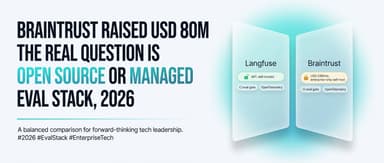
Braintrust vs Maxim vs Langfuse vs Phoenix
| Platform | Best for | Multi-turn tracing | Eval depth | Deployment notes |
|---|---|---|---|---|
| Braintrust | Eval-driven CI plus production loop | Nested spans, chain-of-thought views | 25+ scorers, GitHub Actions gates | Free tier: 1M spans; Pro $249/month |
| Maxim AI | Full lifecycle: sim, eval, observe | OTel-compatible SDKs, session-level scorers | Online eval at session/trace/span | Forwards traces to Grafana, Datadog |
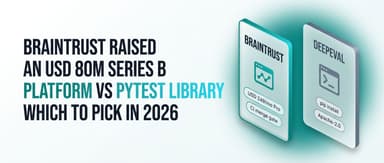
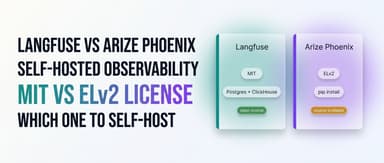
| Arize Phoenix | OTel-native tracing and offline eval | Open-source Apache 2.0 | RAG and LLM-as-judge utilities | Production alerting often needs Arize AX |
| Langfuse | Self-hosted, framework-agnostic traces | MIT core, nested spans | Dataset eval primitives | Teams operate DB and storage |
| Fiddler | Regulated ML plus LLM governance | Hierarchical traces | In-environment guardrails and evals | VPC, air-gapped, SOC 2 |
Why agent evaluation became infrastructure in 2026
For most of 2024, agent teams treated logging as a nice-to-have. That changed when production agents started calling MCP tools, spending API budget, and chaining ten or more reasoning steps per session. Agent observability is the practice of capturing prompts, tool calls, retrievals, latencies, and errors across an entire session. Agent evaluation is the practice of scoring whether those steps produced correct, safe, on-policy outcomes.
The gap between watching and grading is now measurable. LangChain's State of Agent Engineering report, cited in O'Reilly's June 2026 stack article, found that 89% of practitioners implemented observability while only 52.4% run offline evaluations on test sets. Online production evals sit even lower at 37.3%. Perrone's summary is blunt: "Most teams skip eval until something breaks in production. By then they're debugging blind." (Source: O'Reilly AI Agents Stack)
PwC's Agent Survey, referenced in Braintrust's 2026 observability guide, reports that 79% of organizations have adopted AI agents. Adoption outpaced verification. Quality remains the top production blocker at 32% in the same LangChain survey corpus. Inference commoditized; the hard problem moved to knowing which layer failed when a refund agent emails the wrong customer.
The three-tier eval pipeline production teams are adopting
O'Reilly's Layer 5 write-up describes evaluation as infrastructure converging on three speeds. Each tier catches different failure modes.
| Tier | When it runs | What it catches | Typical scorers |
|---|---|---|---|
| PR gate | Every commit | Tool schema regressions, prompt drift, forbidden tool calls | Deterministic checks, small golden sets |
| Nightly regression | Scheduled batch | Multi-step reasoning quality, memory retrieval accuracy | LLM-as-judge, human-labeled datasets |
| Production monitor | Live traffic | Drift, cost spikes, safety violations | Online evaluators, anomaly alerts |
PR-tier checks should be fast and deterministic. Did the agent call refund_api with the right JSON schema? Did the router pick search_orders instead of delete_account? Nightly suites borrow from your labeled failures and benchmark subsets. Production monitoring closes the loop: traces that fail online scorers become tomorrow's test cases.
Maxim AI's 2026 observability guide emphasizes that production agents fail in sequences where "the root cause of a wrong answer at step 10 often traces back to a tool call at step 3 or a context retrieval at step 1." (Source: Maxim Agent Observability) That is why tier-one PR tests target tool routing, not final prose alone.
Agent benchmarks that matter in 2026
Generic LLM leaderboards do not predict agent reliability. Three 2026 benchmarks target agent-specific failure modes.
Terminal-Bench is a harbor-native suite for agents working in real terminal environments. Terminal-Bench 2.0 ships 89 human-verified tasks across software engineering, security, ML, and data science, with Terminal-Bench 2.1 refining 26 tasks for verification hardening. The arXiv paper reports frontier agents and harnesses scoring below 65% on TB 2.0, which is why vendors cite it for coding agents. (Source: Terminal-Bench)
Recovery-Bench measures a different skill: recovering from corrupted state. Letta replays failed trajectories from a weak model on Terminal-Bench tasks, then asks a recovery agent to finish from the polluted environment. On fresh Terminal-Bench runs, models averaged 26.3% with Claude 4 Sonnet leading at 34.8%. On Recovery-Bench, the average fell to 11.2%, a 57% relative drop. Rankings invert: Claude 4 Sonnet tops fresh runs but GPT-5 ranks first on recovery. Recovery is an orthogonal capability, not a proxy for greenfield coding scores. (Source: Letta Recovery-Bench)
Context-Bench names two related efforts teams should not confuse. Letta's Context-Bench scores agentic context engineering: chaining open_files and grep_files across fictional SQL-generated corpora. Claude Sonnet 4.5 leads at 74.0% ($24.58 run cost); even top models miss roughly a quarter of questions. Separately, the open source npow/context-bench CLI includes a memory subcommand that benchmarks Mem0, Zep, embedding retrieval, and naive full-context baselines on LoCoMo and LongMemEval. On LoCoMo, the RLM strategy hit 37.4% F1 versus 6.7% for naive stuffing. (Source: Letta Context-Bench)
| Benchmark | Primary stress test | Standout 2026 signal |
|---|---|---|
| Terminal-Bench 2.x | Long-horizon CLI workflows | Frontier agents stay under ~65% on hard tasks |
| Recovery-Bench | Error recovery from failed trajectories | GPT-5 leads recovery; averages collapse to 11.2% |
| Context-Bench (Letta) | Multi-hop file retrieval and context load | Sonnet 4.5 at 74.0%; cost per run matters |
| context-bench memory CLI | Stateful memory over long chats | RLM beats naive context stuffing on LoCoMo |
Teams that skip eval until something breaks are debugging blind.
Agent observability tools compared for multi-turn tracing
Agent observability tools in 2026 share a session-first data model: traces, spans, tool calls, retrievals, and eval scores on the same timeline. Leading platforms now stress context monitoring (what data reached the model) alongside trace telemetry, because LLM-as-judge alone cannot catch bad retrieval. The comparison table above maps each platform to its best fit; the analysis below explains the trade-offs. (Source: Maxim Agent Observability)
Braintrust positions evaluation inside observability so "production traces convert into test cases with one click." Maxim emphasizes cross-functional no-code eval configuration for product and QA teams. Langfuse and Phoenix appeal when data residency requires self-hosting. Fiddler fits when audit trails and in-VPC evals are mandatory. Datadog LLM Observability remains the consolidation play for teams already on Datadog APM, though eval depth is thinner than eval-first platforms. (Sources: Braintrust Observability, Maxim Observability)
All major entrants export or ingest OpenTelemetry traces. That matters for vendor mobility: your eval suites are sticky, but raw spans can move.
How to build an eval pipeline before you deploy
Start from the agent type O'Reilly's stack describes. A stateless tool caller needs PR-tier schema tests and basic latency alerts. A multi-step workflow needs nightly benchmark slices plus trace-level scorers before launch. A learning agent needs memory benchmarks and Recovery-Bench-style polluted-state tests.
A minimal pipeline looks like this:
- Instrument once with OTel semantics so every tool call, retrieval, and generation is a span with session IDs.
- Curate 20 to 50 golden tasks from real tickets, including known failures, not demo happy paths.
- Wire PR checks for tool selection, JSON validity, and policy rules in under two minutes per run.
- Schedule nightly jobs against Context-Bench memory subsets, Terminal-Bench smoke tasks, or your private harness.
- Enable online scorers on a sample of production traffic; alert when scores drop more than one standard deviation from baseline.
- Promote failures to tests within 24 hours so the same bug cannot ship twice.
Operator note (first-hand): Cloning npow/context-bench and running context-bench --help surfaces the memory subcommand with --system naive --system mem0 --relay <url> --dataset locomo flags documented in the repo README. Even without a live relay, the CLI confirms which memory backends the harness expects and gives platform teams a concrete nightly job template to wrap in CI. Pair that with Braintrust or Langfuse trace export and you have tier-one and tier-two coverage without waiting for a production incident.
Inference: teams with only Datadog-style latency dashboards will catch slowdowns but miss wrong-tool regressions until users complain. Add at least one eval-first platform or open-source Phoenix plus a custom scorer.
What current benchmarks still miss
O'Reilly's honest assessment still holds: platforms are strongest on single-turn and tool-calling evaluation. Multi-agent handoffs, weeks-long memory, and agents that learn across sessions lack standard suites. Recovery-Bench and Context-Bench are steps toward long-horizon realism, not the final word.
Provider SDKs are bundling memory, tools, and basic eval into one API. Custom eval infrastructure still matters for regulated workflows, multi-vendor routing, and agents that must recover from mistakes instead of restarting clean.
Frequently asked questions
What is agent evaluation vs agent observability?
Agent observability records what happened across a session: prompts, tool inputs and outputs, latencies, token counts, and errors. Agent evaluation scores whether the session achieved the right outcome safely. Observability answers "what path did the agent take?" Evaluation answers "was that path correct?" You need both; 89% observability with 52% eval adoption shows most teams only have half the stack. (Source: O'Reilly AI Agents Stack)
What are the best agent observability tools in 2026?
For eval-driven development with CI gates, Braintrust integrates scorers from pull request to production. For full-lifecycle simulation plus OTel export, Maxim AI targets cross-functional teams. For self-hosted OTel tracing, Arize Phoenix and Langfuse are the common open-source starting points. For regulated industries, Fiddler adds governance and in-environment guardrails. Teams on Datadog APM often add Datadog LLM Observability for unified infra plus LLM spans. (Sources: Braintrust Observability, Maxim Observability)
Which AI agent benchmarks matter for production?
Match the benchmark to your failure mode. Use Terminal-Bench for CLI and coding agents doing multi-file DevOps work. Use Recovery-Bench if agents must fix corrupted environments instead of only starting fresh. Use Context-Bench or the context-bench memory CLI when retrieval and memory quality dominate. No single score replaces task-specific golden sets built from your production traces. (Sources: Terminal-Bench, Letta Recovery-Bench)
How do you build an agent evaluation pipeline?
Adopt the three-tier model: deterministic PR checks on tool schemas and routing, nightly regression with LLM-judged suites and public benchmark slices, and online production scorers on sampled live traffic. Export OpenTelemetry traces from day one, promote every production failure into a labeled test within 24 hours, and score intermediate steps, not final answers alone. (Source: O'Reilly AI Agents Stack)
Why do teams have observability but not evals?
Tracing is faster to adopt because SDKs and frameworks auto-instrument spans. Evals require labeled datasets, scorer design, and agreement on what "correct" means across product, legal, and engineering. Human review (59.8%) and LLM-as-judge (53.3%) remain the most common methods in LangChain's survey, which signals that automated eval maturity still lags instrumentation. (Source: O'Reilly AI Agents Stack)
Related coverage
- Mem0 vs Zep vs Letta: Agent Memory Compared (2026) for the memory layer benchmarks like LoCoMo pair with.
- Agent frameworks 2026: AutoGen fork, AG2 guide for orchestration choices that determine what your traces contain.
- Microsoft Agent Framework 1.0 ships graph workflows and MCP for workflow-level state you will need to evaluate.
- OpenAI Agents SDK update adds native sandboxes for safer long-horizon runs for guardrails that complement eval gates.
- Langfuse vs Opik: Self-Hosted LLM Observability Compared for the tracing and eval backend these pipelines run on.
References
- Braintrust Agent Observability 2026 - https://www.braintrust.dev/articles/best-ai-agent-observability-tools-2026
- Letta Context-Bench - https://www.letta.com/blog/context-bench
- Letta Recovery-Bench - https://www.letta.com/blog/recovery-bench
- Maxim Agent Observability 2026 - https://www.getmaxim.ai/articles/top-5-tools-for-ai-agent-observability-in-2026
- O'Reilly AI Agents Stack 2026 - https://www.oreilly.com/radar/the-ai-agents-stack-2026-edition
- Terminal-Bench - https://www.tbench.ai/