The agent framework landscape consolidated fast. Between October 2025 and April 2026, Microsoft folded AutoGen and Semantic Kernel into a single new SDK, LangGraph shipped its first stable major release, OpenAI's Agents SDK absorbed the experimental Swarm project, and Mastra hit 1.0 after reaching 22,000 GitHub stars in its first 15 months. If you are starting a new agent project, or checking whether your current stack still has a future, this page is the status reference.
Key takeaways:
- LangGraph 1.0, OpenAI Agents SDK, Mastra 1.0, CrewAI, and Microsoft Agent Framework are all actively maintained as of June 2026.
- AutoGen and Semantic Kernel entered maintenance mode in October 2025 when Microsoft launched its Agent Framework.
- OpenAI Swarm was archived in March 2025; users were directed to the Agents SDK.
- "Maintenance mode" means bug fixes and security patches continue, but no new features will ship.
- If you are on AutoGen, you have a working migration path to either MAF or the community-managed AG2 fork.
Framework status at a glance
| Framework | Status | Latest stable | Since | Language | Notes |
|---|---|---|---|---|---|
| LangGraph | Actively maintained | 1.0 | Oct 22, 2025 | Python | Powers Uber, LinkedIn, Klarna in production |
| OpenAI Agents SDK | Actively maintained | 0.17.1 | May 11, 2026 | Python | Successor to Swarm; 26k+ GitHub stars |
| Mastra | Actively maintained | 1.0 | Jan 2026 | TypeScript | 22k+ stars; 300k weekly npm downloads |
| CrewAI | Actively maintained | 1.14.3 | Apr 24, 2026 | Python | Largest standalone framework community |
| Microsoft Agent Framework | Actively maintained | 1.0 | Apr 3, 2026 | Python + .NET | Unifies AutoGen + Semantic Kernel |
| AutoGen | Maintenance mode | 0.4.x | Oct 2025 | Python | Bug fixes only; migrate to MAF or AG2 |
| Semantic Kernel | Maintenance mode | 1.x | Oct 2025 | Python + .NET | Bug fixes only; migrate to MAF |
| AG2 | Community managed | 0.11.2 | Feb 2026 | Python | AutoGen community fork; A2A support |
| OpenAI Swarm | Archived | — | Mar 2025 | Python | Educational only; superseded by Agents SDK |
(Source: Microsoft Agent Framework blog, LangChain changelog, OpenAI Agents SDK README, Mastra documentation)
Actively maintained frameworks
LangGraph
LangGraph reached 1.0 on October 22, 2025 — described by the LangChain team as "the first stable major release in the durable agent framework space." The key design decision is a graph-based execution model that makes agent state explicit: every node, edge, and checkpoint is inspectable and resumable. (Source: LangChain changelog)
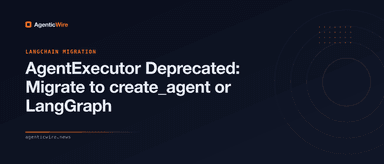
Production adoption is significant. The framework runs in production at Uber, LinkedIn, and Klarna. Version 1.0 brought automatic state persistence across interruptions, a first-class human-in-the-loop API, and the deprecation of langgraph.prebuilt in favor of langchain.agents. New projects should target the 1.0 API directly.
OpenAI Agents SDK
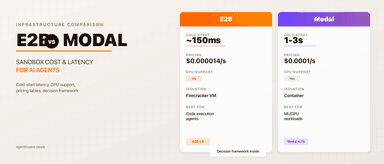
The Agents SDK launched in March 2025 as the production successor to the experimental Swarm framework. The April 2026 "Next Evolution" update was the largest enhancement since launch, adding native sandbox execution (E2B and Modal), a long-horizon harness for multi-day agent runs, and a subagent primitive in beta. The SDK had 26,000+ GitHub stars and 4,000+ forks as of May 2026. (Source: OpenAI Agents SDK)
The mental model carries directly from Swarm: "Routines" (an agent plus its tools) and "Handoffs" (transferring control between agents). The core Swarm primitives survived intact; the upgrade path is minimal.
Mastra
Mastra launched its 1.0 release in January 2026. The framework is TypeScript-native and takes an opinionated stance: everything an agent needs — workflows, memory, RAG, evals, and MCP tool connections — ships in one package rather than requiring separate libraries. (Source: Mastra documentation)
By March 2026, the repository had 22,276+ GitHub stars and 300,000+ weekly npm downloads at launch. Monthly downloads reached 1.8 million by February 2026 with 300+ contributors. The team behind it built Gatsby.js (Sam Bhagwat, Abhi Aiyer, Shane Thomas). The framework's own memory system scored 94.87% on the LongMemEval benchmark.
CrewAI
CrewAI has shipped continuously through 2026. Version 1.14.3 was the latest stable release as of April 24, 2026. The framework focuses on role-based multi-agent collaboration: you define crews, assign roles, and CrewAI manages task delegation and result aggregation. It remains the framework with the largest standalone community outside of the Microsoft and LangChain ecosystems.
Microsoft Agent Framework (MAF)
MAF 1.0 reached general availability on April 3, 2026. Microsoft described it as a "production-ready release: stable APIs, and a commitment to long-term support." It unifies Semantic Kernel's enterprise foundations with AutoGen's multi-agent orchestration patterns into a single .NET and Python SDK with full MCP and A2A protocol support. (Source: Microsoft Agent Framework blog)
Install: pip install agent-framework (Python) or dotnet add package Microsoft.Agents.AI (.NET). Migration assistants are provided for both AutoGen and Semantic Kernel projects.
Maintenance mode: AutoGen and Semantic Kernel
Microsoft announced in October 2025 that both AutoGen and Semantic Kernel would "remain in maintenance mode, which means they will not receive new feature investments but will continue to receive bug fixes, security patches and stability updates."
That statement matters for planning. Both frameworks still run; nothing breaks tomorrow. But any feature request, protocol integration, or architecture improvement will be directed at MAF rather than at AutoGen or Semantic Kernel. The meaningful question is not "does AutoGen work?" — it does — but "is AutoGen the right foundation for a project I plan to maintain for two or three years?" The maintenance-mode designation says Microsoft's answer is no.
Teams that want to stay in the AutoGen ecosystem without migrating to MAF have an option: AG2, a community-managed Python fork that shipped v0.11.2 in February 2026 with A2A protocol support and active development. (Source: VentureBeat AutoGen)
Archived: OpenAI Swarm
OpenAI Swarm launched in October 2024 as an educational framework for exploring multi-agent orchestration. When the production Agents SDK launched in March 2025, Swarm was superseded immediately. The repository README was updated to state: "Swarm is now replaced by the OpenAI Agents SDK, which is a production-ready evolution of Swarm." The conceptual model, Routines and Handoffs, transfers directly to the Agents SDK.
Nothing in Swarm is unavailable in the Agents SDK. The migration is a namespace change, not a rewrite.
What maintenance mode means in practice
A framework in maintenance mode is not a dead framework. It is a framework with a ceiling. For a greenfield project starting in June 2026, that ceiling matters:
- No new integrations. MCP, A2A, or any future agent protocol that ships after October 2025 will not land in AutoGen or Semantic Kernel.
- No architectural improvements. If the framework has a known weakness — say, AutoGen's GroupChat overhead at scale — that weakness will not be addressed.
- Security patches continue. CVEs and dependency vulnerabilities will be patched. The framework will not become actively dangerous to run.
- Community support continues. GitHub issues and discussions remain open.
Decision rule: if your project needs to interoperate with the MCP or A2A ecosystems, or if you expect it to be in production beyond 2027, a migration plan is worth starting now, even if you do not execute it immediately.
How to check a framework's real status
Published status announcements are the authoritative source, but commit frequency tells you whether the "maintained" label is real. Two checks work well at project selection time:
Operator note (first-hand): run pip show autogen and pip show agent-framework on the same machine. The autogen package shows Requires-Python: >=3.9 and a version in the 0.4.x line with no recent pip release activity. The agent-framework package shows 1.0.x with an April 2026 release date. The package metadata timestamps are one objective signal of active development. For the GitHub side, compare commit timestamps on the default branch: curl -s https://api.github.com/repos/microsoft/autogen/commits?per_page=1 | python3 -m json.tool | grep date gives you the last-commit date without cloning the repo.
FAQ
Is AutoGen deprecated in 2026?
AutoGen is not deprecated — it is in maintenance mode as of October 2025. Microsoft will continue to release bug fixes and security patches, but no new features will be added. The recommended migration path is to Microsoft Agent Framework 1.0. Developers who want to stay in the Python AutoGen ecosystem without migrating to MAF can use AG2, the community-managed fork.
What happened to OpenAI Swarm?
OpenAI Swarm was archived in March 2025 when the production OpenAI Agents SDK launched. Swarm was always an educational framework; its README now explicitly redirects users to the Agents SDK as "a production-ready evolution of Swarm." The core Routines and Handoffs model transfers directly, making migration low-effort.
Is LangGraph stable and actively maintained?
LangGraph 1.0 shipped on October 22, 2025, making it the first stable major release among the leading agent frameworks. It is actively maintained by the LangChain team and runs in production at Uber, LinkedIn, and Klarna. The 1.0 release removed langgraph.prebuilt; projects on older versions should migrate to langchain.agents.
Which agent framework should I pick in 2026?
For TypeScript projects, Mastra is the only purpose-built TypeScript-native option. For Python projects, LangGraph and the OpenAI Agents SDK are the strongest actively-maintained choices; pick LangGraph when you need complex graph-based state management, and the Agents SDK when you are building on top of OpenAI models. For .NET or enterprise Python teams already in the Microsoft ecosystem, MAF 1.0 is the logical destination. Avoid starting new projects on AutoGen, Semantic Kernel, or Swarm.
Is CrewAI still being developed in 2026?
CrewAI is actively developed. The latest stable version was 1.14.3 as of April 24, 2026, and the team has shipped consistently across 2025 and 2026. It is the largest standalone agent framework community outside of the LangChain and Microsoft ecosystems.
Related coverage
- OpenAI Agents SDK vs LangGraph: Which Framework for Production Agents? - head-to-head comparison for production agent selection
- AutoGen to Microsoft Agent Framework: Step-by-Step Migration - the migration guide if you are moving off AutoGen
- LangGraph vs CrewAI vs agno: 2026 Framework Guide - broader framework comparison including newer entrants
- Agent frameworks 2026: AutoGen fork, AG2 guide - deep dive on the AutoGen/AG2 Python fork story
References
- LangChain changelog - https://changelog.langchain.com/announcements/langgraph-1-0-is-now-generally-available
- Mastra documentation - https://www.generative.inc/mastra-ai-the-complete-guide-to-the-typescript-agent-framework-2026
- Microsoft Agent Framework blog - https://devblogs.microsoft.com/agent-framework/microsoft-agent-framework-version-1-0/
- OpenAI Agents SDK - https://www.respan.ai/articles/openai-agents-sdk-vs-swarm
- VentureBeat AutoGen - https://venturebeat.com/ai/microsoft-retires-autogen-and-debuts-agent-framework-to-unify-and-govern